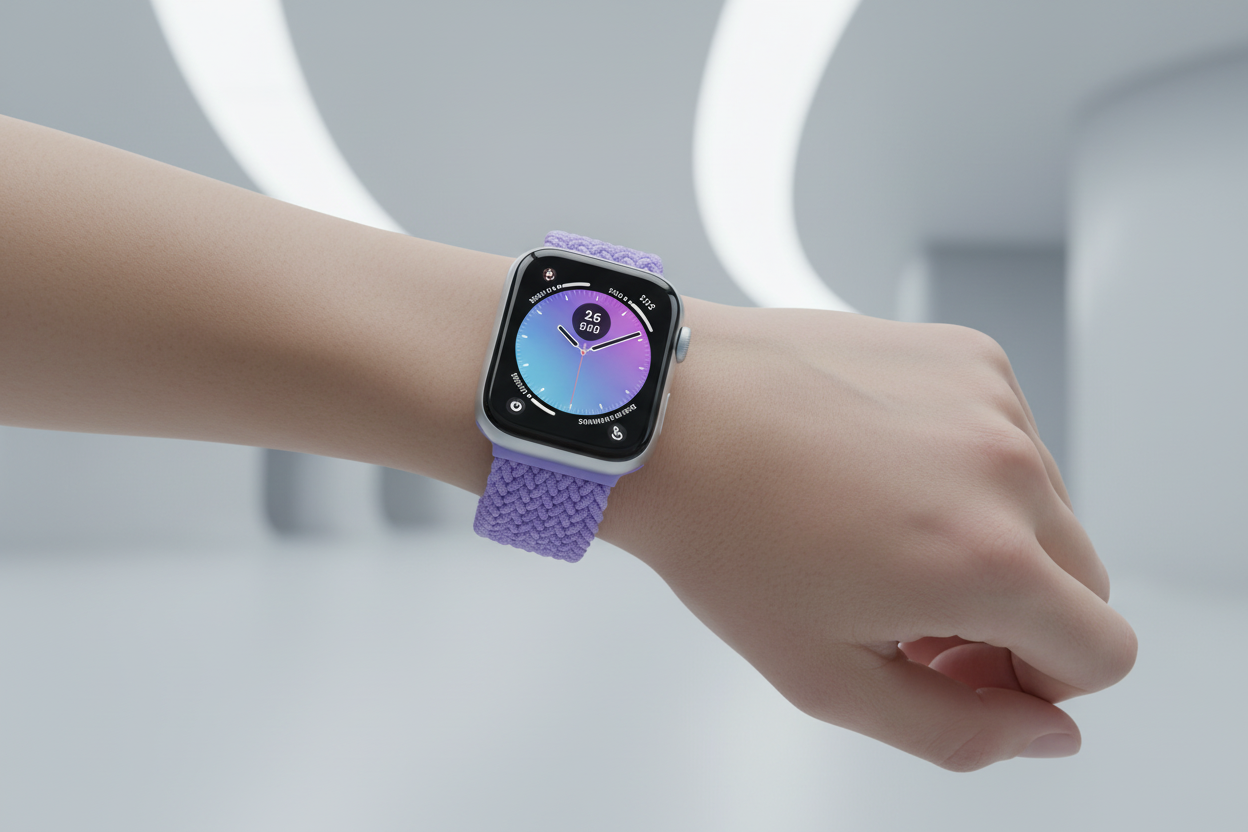
With so many health metrics on the Apple Watch, it can be tricky to interpret all the numbers. Here are the key things you need to know — and how you can mindfully use these metrics to improve your wellness.
Using the Activity App Effectively
The Activity app (the one with the red, blue, and green circles) is a great place to start. It benchmarks your daily fitness goals and can even be added as a watch face complication for at-a-glance progress.
Green Exercise Ring
Track your workouts in the Workout app to fill your Exercise ring. Choose from an extensive list of exercises and view deeper insights — like steps, flights climbed, and vitals — in the Health app on your iPhone.
Red Move Ring
The Move ring tracks all activity throughout your day — small walks, chores, taking the stairs. Your Apple Watch automatically tracks movement, all of which contributes toward closing your Move ring.
Blue Stand Ring
Sitting for long periods can be harmful to your health. Every time you stand for at least one minute out of an hour, it counts toward your daily Stand goal.
Reading Vitals and Health Data
The Apple Watch provides remarkable insights into your vitals — data that used to require a doctor's visit. That said, it's important to remember that the Apple Watch is a fitness device, not a medical device. Always be thoughtful about the decisions you make based on its data.
Heart Rate Monitor
Your Apple Watch passively records your current, resting, and walking heart rate averages. Find this data in the Heart Rate app on your watch. Keep in mind that healthy norms vary by age, sex, and other individual factors.
ECG
Available on Apple Watch Series 4, 5, 6, and 7, the ECG app provides deeper insights into heart health. It can detect possible conditions like atrial fibrillation (A-fib) and identify irregular heart rhythms. Any indication of an abnormality should be discussed with your doctor promptly.
Blood Oxygen
Blood oxygen levels indicate how well your body distributes oxygen from your lungs. Available on Apple Watch Series 6 and 7, it can be tracked during sleep, exercise, and throughout the day. Healthy levels range from 95% to 100% — anything significantly lower is worth discussing with a doctor.
VO₂ Max
VO₂ Max measures your cardiovascular fitness — specifically how well your body consumes oxygen during exercise. The higher the number, the greater your endurance. Healthy levels vary by demographic, so if yours seems low, consider adding more cardio to your routine.
Please remember: As incredible as the Apple Watch is, it is not a medical device. Use its health metrics for valuable insights, but always consult a doctor for medical concerns.
Follow us on Instagram @ownloop for all our latest content, and visit ownloop.com for the most comfortable Apple Watch bands around.